
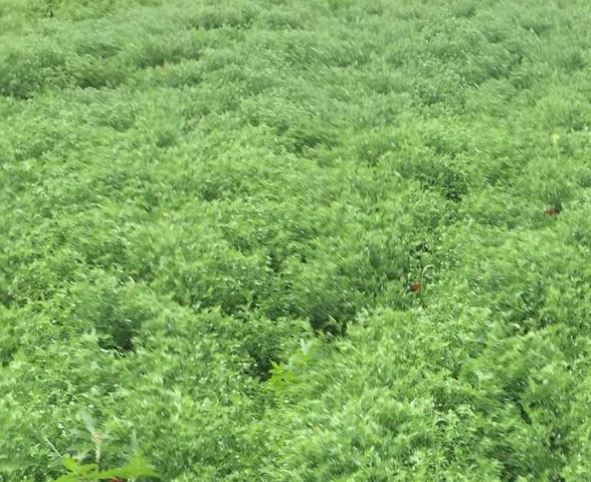
Chickpeas: In legumes like chickpeas and lentils, pre-planting seed calibration, fungal disease control, and row spacing adjustments directly impact emergence. Proper preparation can increase yields by 20–40%, especially in arid regions.
“Tip: Calibrated seed ensures even seeding and speeds up emergence.”
1) The Importance of Seed Calibration
Calibration ensures:
- Grain size is equalized,
- The planter lays uniform seed,
- Emergence is homogeneous,
- Waste in fertilizer and pesticide use is prevented.
For chickpeas: Larger grains over 8–10 mm should be preferred.
For lentils: Sieving + density separation yields optimal results.
2) Seed Treatment and Its Benefits
Legumes are particularly susceptible to fungal diseases such as Ascochyta (anthracnose).
Seed treatment:
- Prevents disease transmission,
- Reduces post-emergence plant loss,
- Encourages root development.
Metalaxyl-M, azoxystrobin, or thiram-containing pesticides are commonly used.
Application: Care should be taken to completely cover the seed surface.
3) Soil Preparation and Planting Depth
Correct planting depth is critical for chickpeas and lentils:
- Chickpeas: 5–7 cm
- Lentils: 3–5 cm
- Planting too deep → delayed emergence and loss of germination
- Shallow planting → poor root anchorage
Planting should be done when the soil is slightly moist.
4) Row Spacing and Across-Row Adjustments
Proper row spacing after calibration provides the following benefits:
- Increases sunlight,
- Reduces weed pressure,
- Improves air circulation.
Chickpeas:
- Row Spacing: 25–35 cm
- Across-Row Spacing: 6–10 cm
Lentils:
- Row Spacing: 15–20 cm
- Across-Row Spacing: 3–6 cm
5) Fertilization and Micronutrient Supplementation
Although legumes have nitrogen-fixing capabilities, initially:
- Phosphorus application enhances root development.
- Molybdenum supplementation promotes nodule formation.
- If organic matter is low, zinc can be applied.
6) Disease Management
Even if pre-planting preparation is done correctly:
- Soil-borne fungal pathogens and
- Seedling blight due to cold and heat stress can occur.
Therefore:
- Seed treatment is highly recommended.
- If necessary, early post-emergence protective treatments can be applied.
- Crop rotation is the most effective cultural measure for legumes.
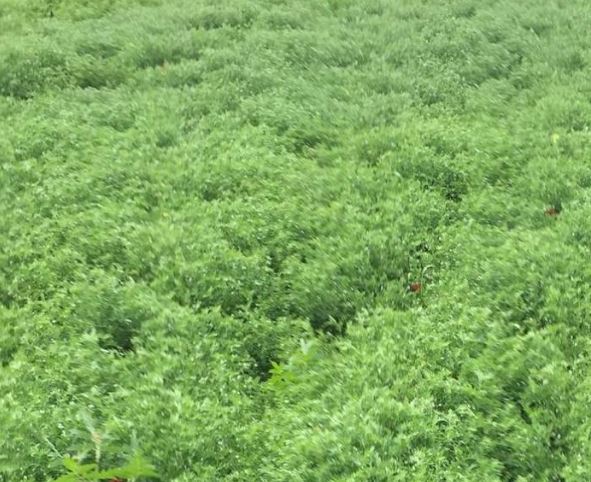
“Note: Complete surface coverage during seed treatment is the most critical step in reducing fungal contamination.”